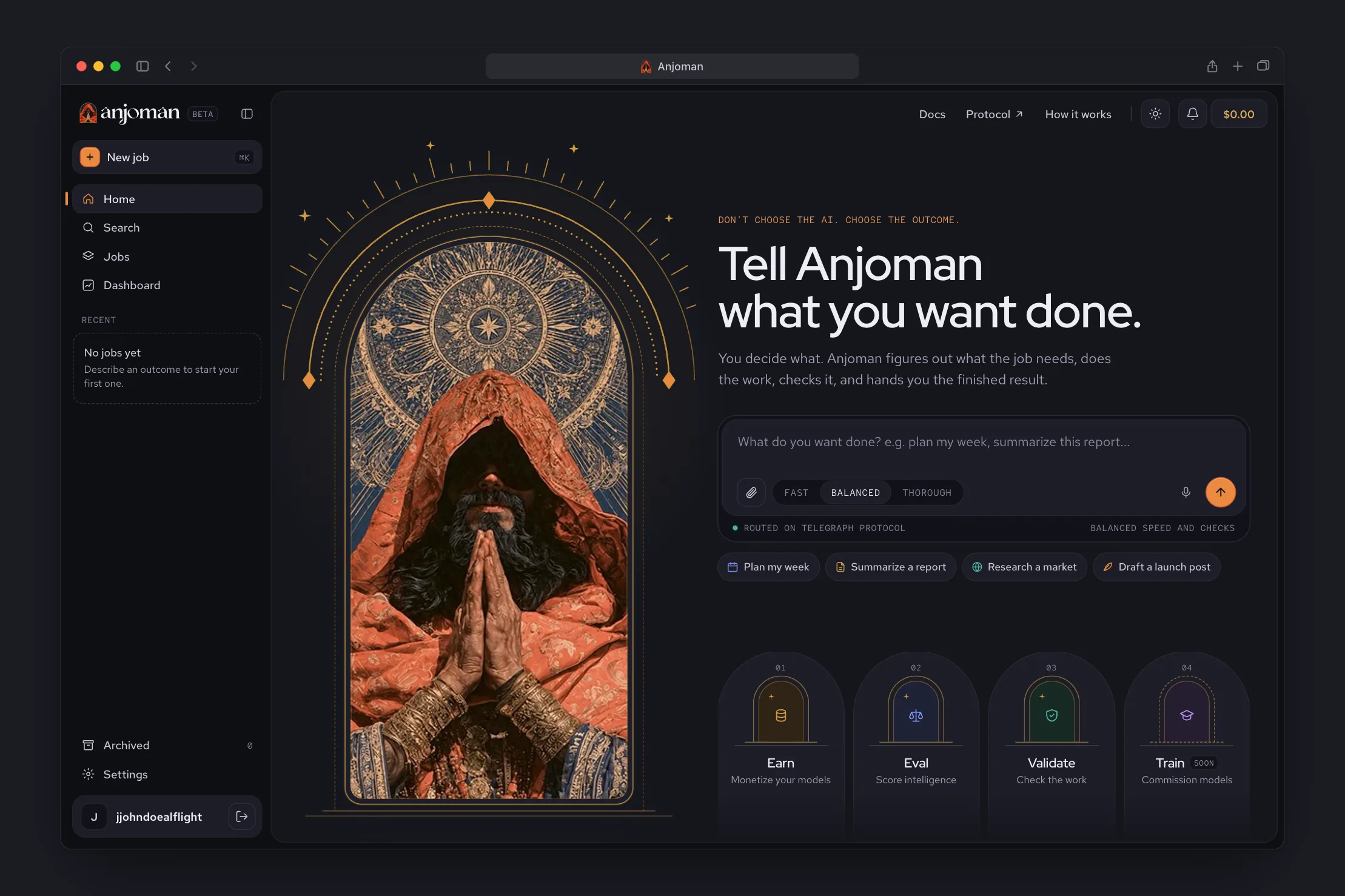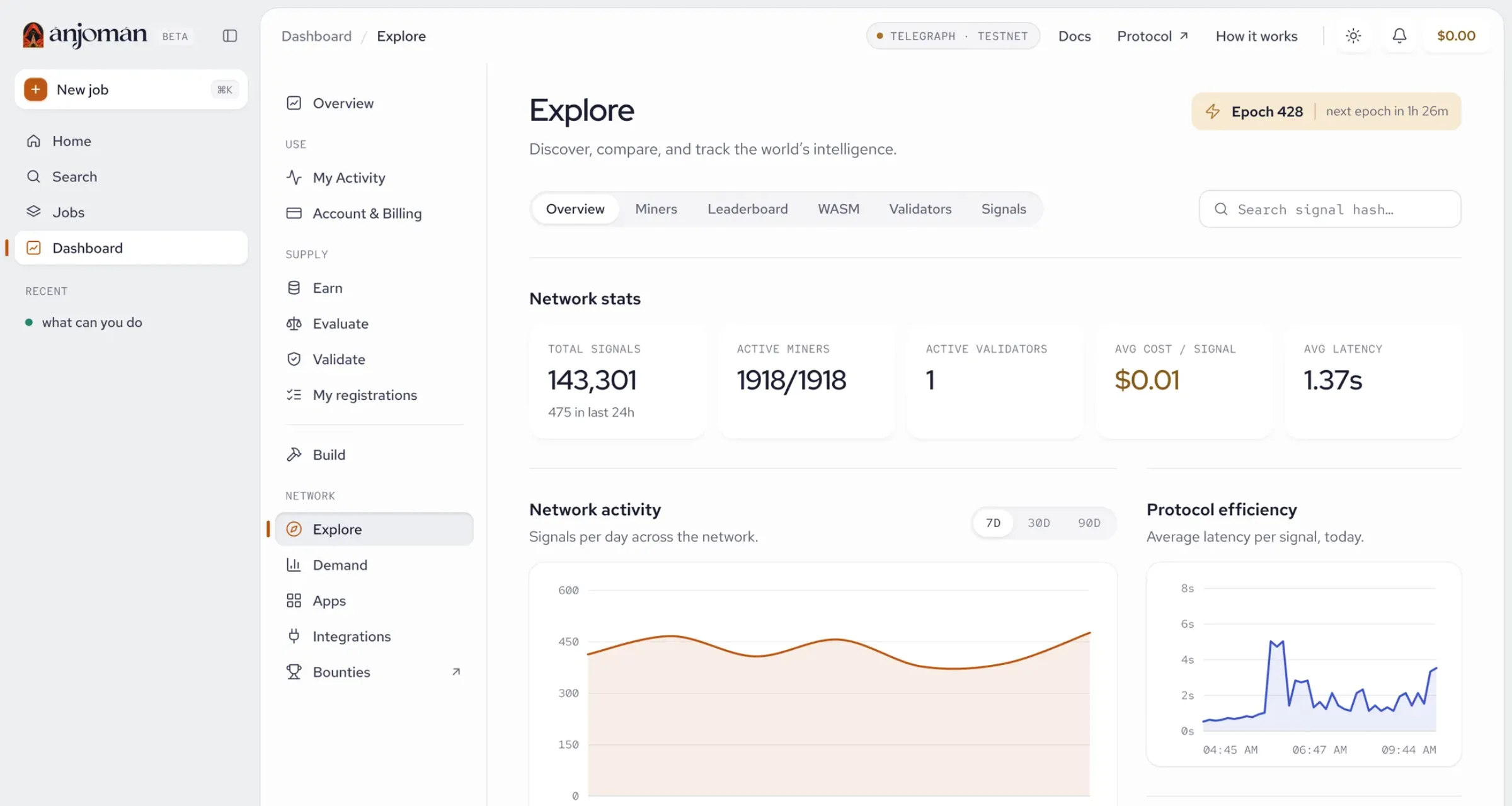
Anjoman is an AI app on the Telegraph network. You do not pick a model. You say what you want done, and Anjoman works out what the job needs, sends it to the best AI on the network (a miner), has other nodes (validators) check the answer, and hands you the result.
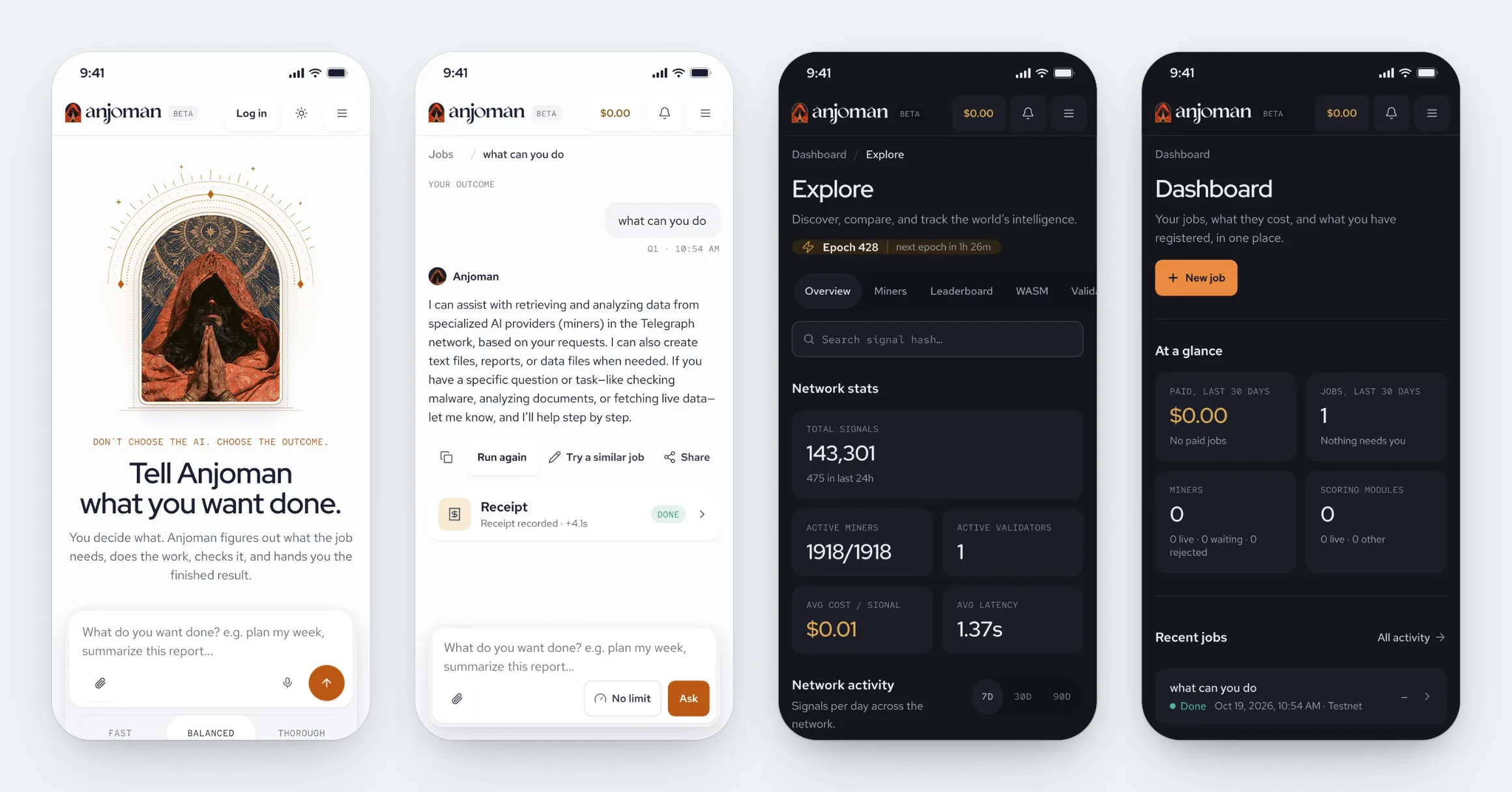
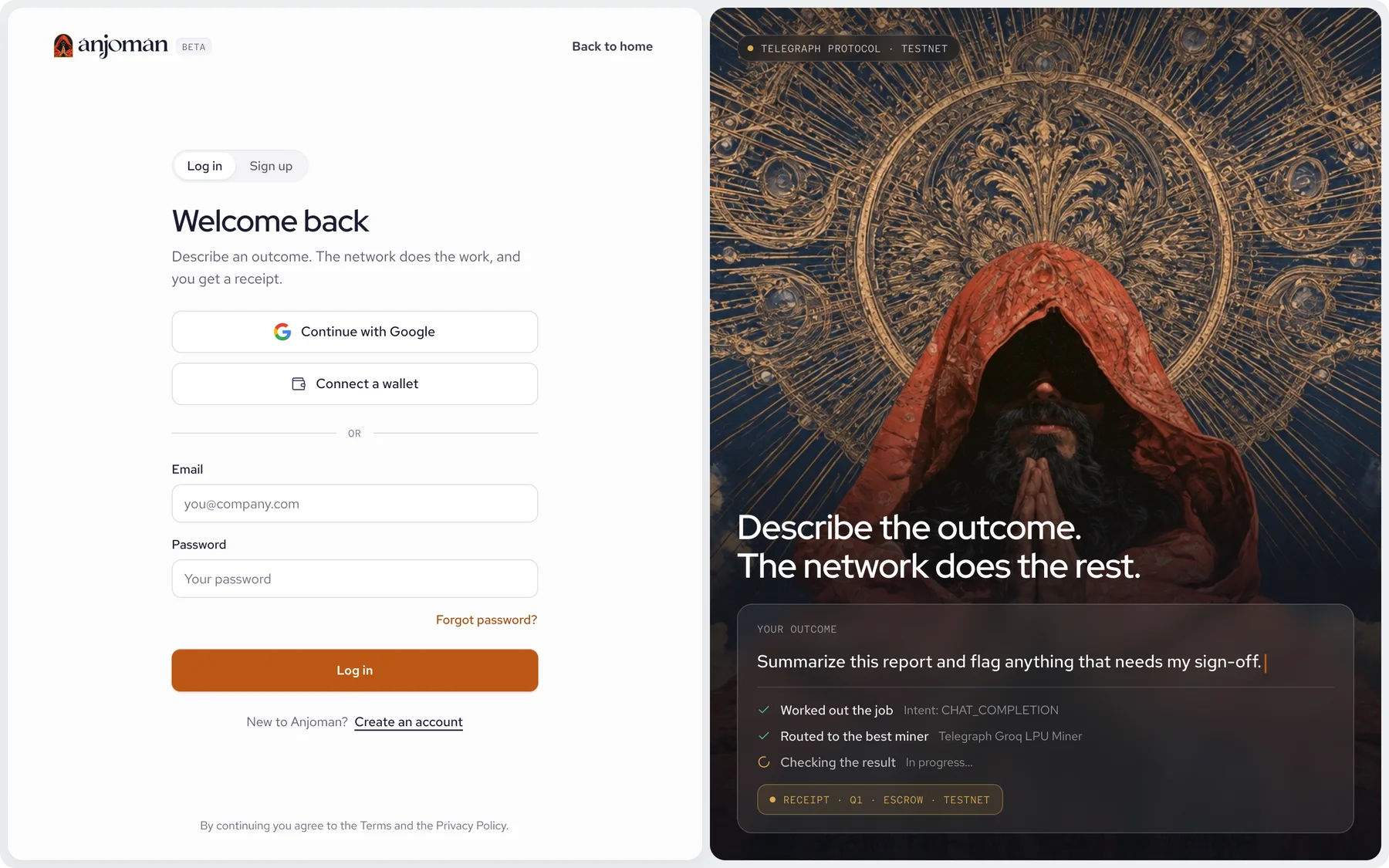
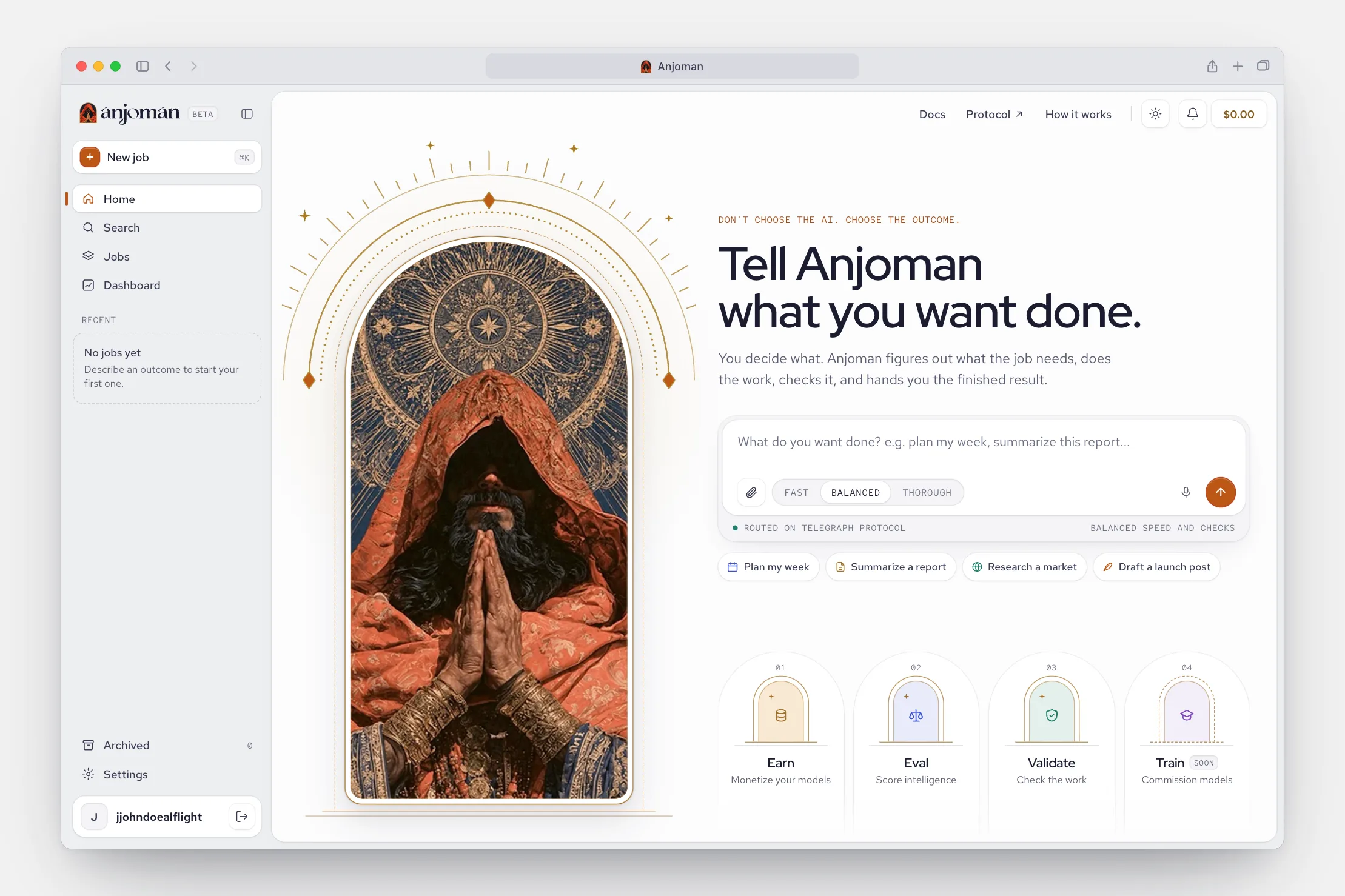
I redesigned the whole product in Figma: the home page, the job screen, the dashboard, the network explorer, sign in and sign up. Every page has a light and a dark version, and the pages people use most have a phone version too. It all comes from one set of components and colour tokens.
One idea holds it together: the receipt. Every job gets one, attached to the question, not to the answer. It shows what was asked, each step and how long it took, which miner did the work, how many validators checked it, and what it cost. While the job runs, the receipt fills in live.
The face of the brand is the seer, a hooded figure praying under a gold mandala. On the home page he stands in a doorway, and the mandala slowly lights up behind him.
The film above is the Figma design built in code: a question goes in, the job runs, the receipt fills in, and the same screen turns dark.
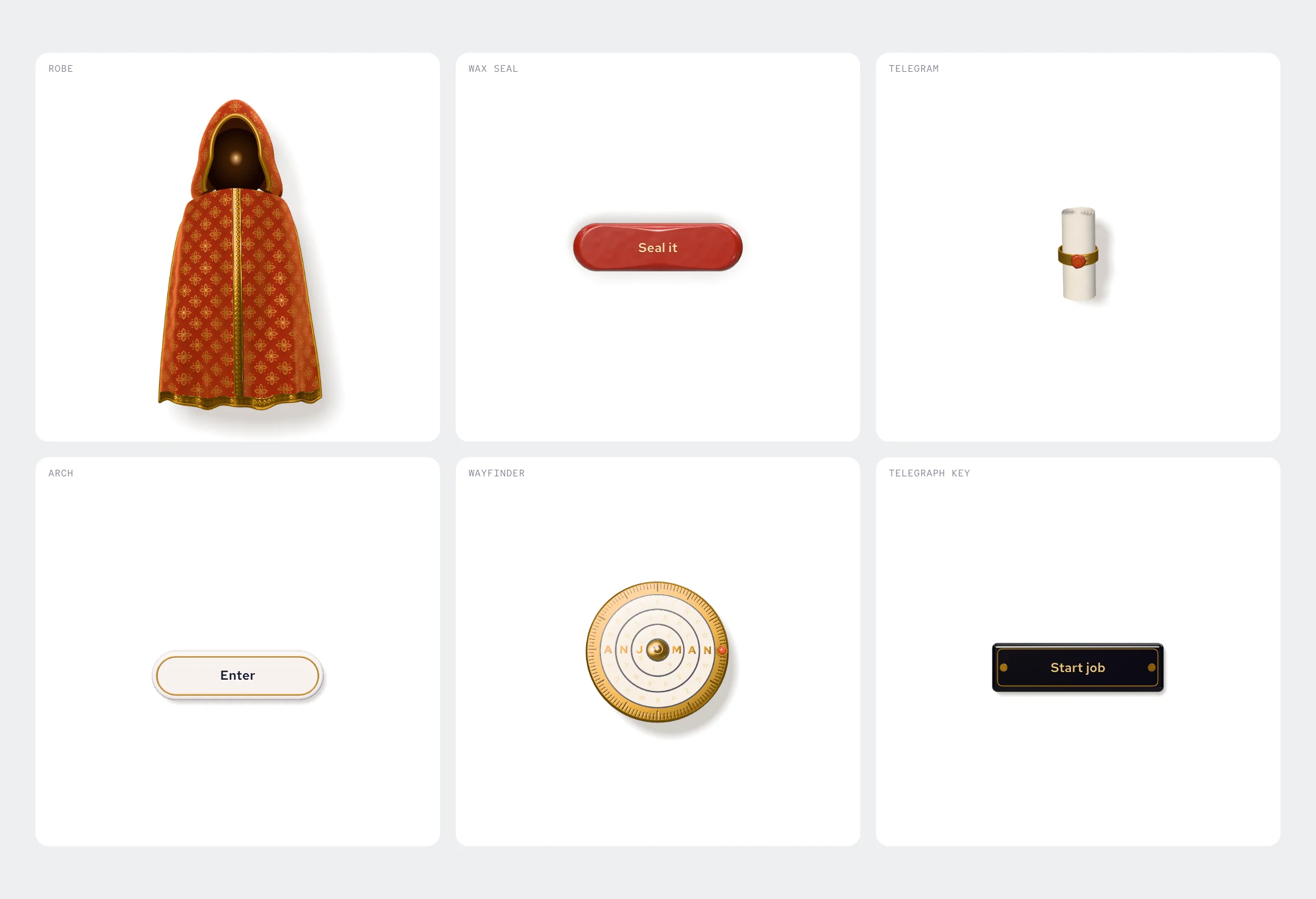
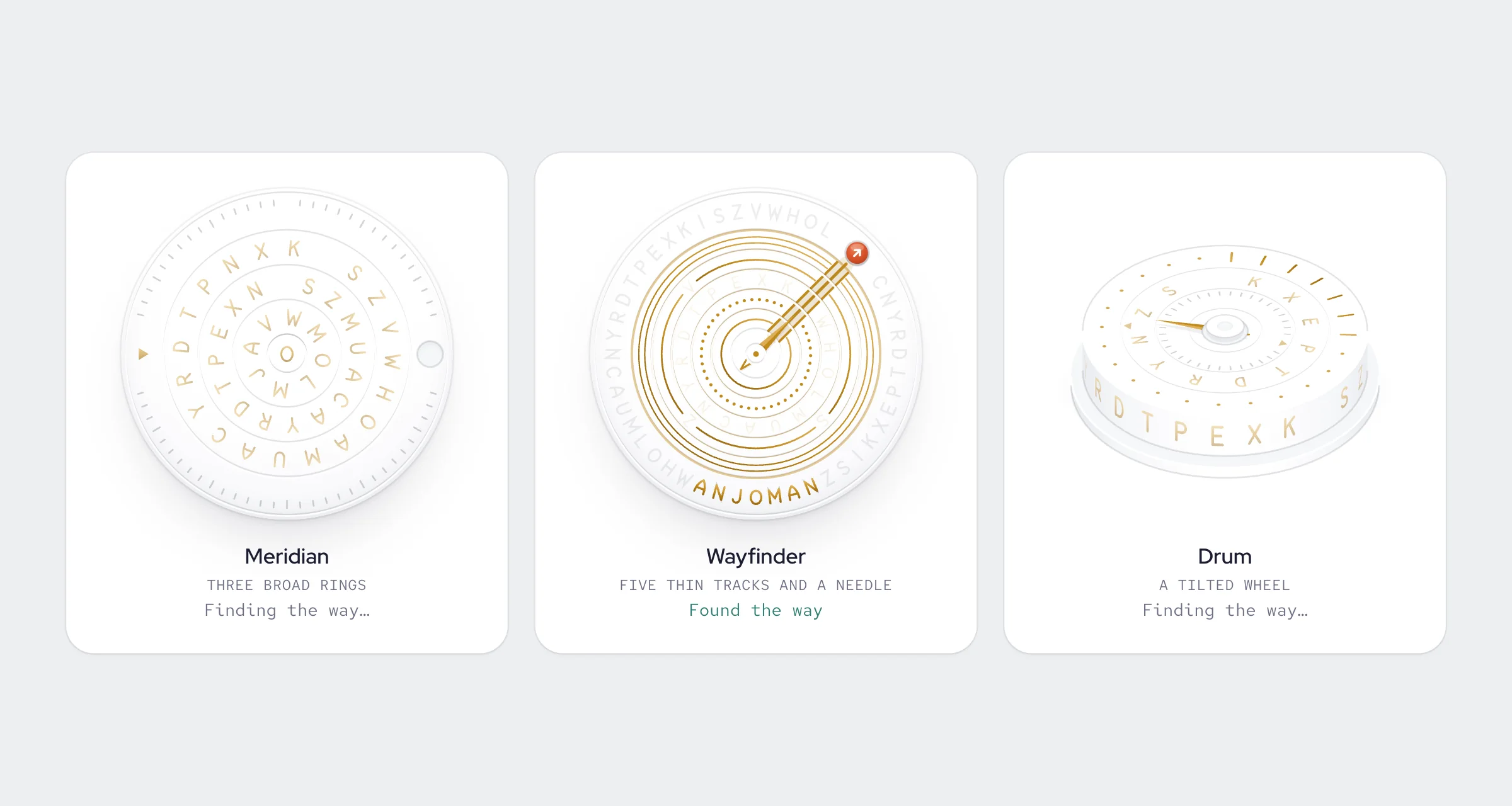
Beside the product I made two studies, both built in code: buttons that turn into the thing they name — a robe, a wax seal, a telegram, an arch, a disc, a telegraph key — and loaders whose engraved rings turn while a job runs, then lock until the name reads straight across.